Acne is one of the most common skin concerns affecting both teenagers and adults. Breakouts can appear due to excess oil production, clogged pores, bacteria, and inflammation.
In recent years, LED light therapy masks have become a popular at-home skincare device for treating acne. Many of these devices include blue light therapy, which is specifically designed to target acne-causing bacteria.
But do LED masks actually help acne?
And how effective are they compared to traditional acne treatments?
In this guide, we explain:
- how blue light therapy works
- whether LED masks help acne
- what results you can realistically expect
- who should consider using an LED mask for acne treatment
What Causes Acne?
Acne develops when pores become clogged with oil, dead skin cells, and bacteria.
Several factors contribute to acne breakouts, including:
- excess sebum (oil) production
- clogged pores
- inflammation
- bacteria such as Cutibacterium acnes
When these bacteria multiply within the pores, they trigger inflammation that leads to pimples, whiteheads, and other types of breakouts.
Because bacteria play an important role in acne formation, treatments that reduce bacterial activity can help improve skin clarity.
What Is Blue Light Therapy?
Blue light therapy is a skincare treatment that uses light wavelengths around 415–450 nanometers.
These wavelengths are known to help destroy acne-causing bacteria on the surface of the skin.
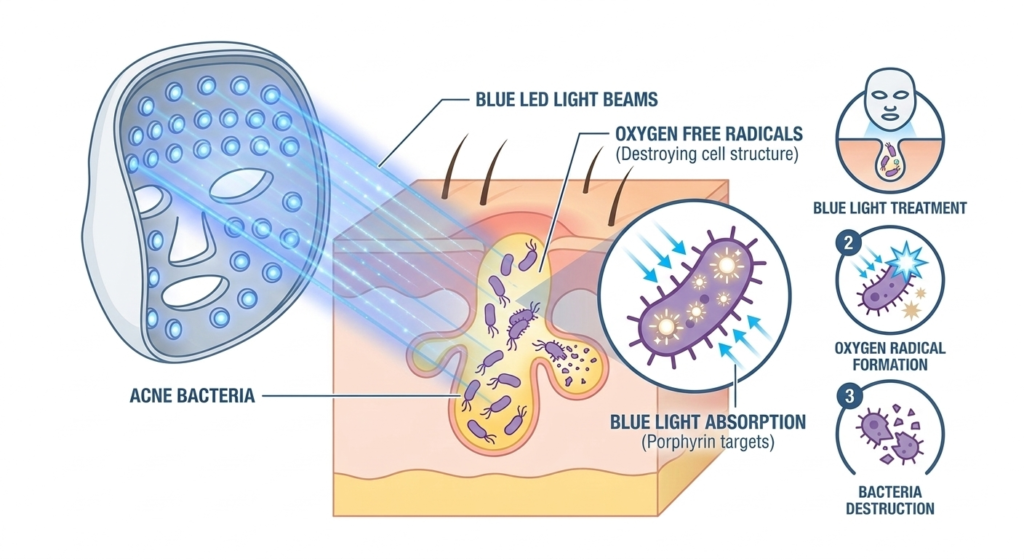
When blue light penetrates the upper layers of the skin, it activates molecules inside acne-causing bacteria. This reaction produces oxygen radicals that damage and destroy the bacteria.
Unlike many acne treatments, blue light therapy does not rely on harsh chemicals or antibiotics.
Because of this, it has become a popular option for people looking for non-drug acne treatments.
Do LED Masks Actually Help Acne?
Research suggests that blue light therapy can help reduce mild to moderate acne.
Several clinical studies have found that consistent blue light treatments may:
- reduce inflammatory acne lesions
- decrease acne-causing bacteria
- improve overall skin clarity
However, the effectiveness of LED masks depends on several factors, including:
- device quality
- treatment consistency
- acne severity
- overall skincare routine
Most LED masks are designed for short daily treatments, typically lasting between 3 and 10 minutes.
While results are not immediate, many users begin noticing improvements after several weeks of consistent use.
How Long Does It Take to See Results?
LED masks are not an instant cure for acne.
Instead, they work gradually by reducing bacterial activity and calming inflammation over time.
Typical results may look like this:
Week 1–2
Reduced redness and inflammation.
Week 3–4
Fewer active breakouts.
Week 6–8
Clearer overall skin tone and fewer recurring pimples.
Consistency is the most important factor for achieving noticeable improvements.
Who Should Use an LED Mask for Acne?
LED masks may be helpful for people who:
- experience mild to moderate acne
- want a non-medication acne treatment
- prefer at-home skincare devices
- want to complement an existing skincare routine
They are often used alongside other treatments such as:
- gentle cleansers
- salicylic acid
- retinoids
- oil-control skincare products
For many people, LED masks become a convenient addition to a daily skincare routine.
Who Should Not Use LED Masks for Acne?
Although LED masks are generally considered safe, they may not be suitable for everyone.
LED masks may not be ideal for people who:
- have severe cystic acne
- are taking medications that increase light sensitivity
- have certain skin conditions that react to light
If acne is severe or persistent, consulting a dermatologist may be recommended before starting light therapy treatments.
Best LED Masks for Acne Treatment
Many modern LED masks combine blue light therapy for acne with red light therapy for anti-aging benefits.
If you’re looking for devices that include both technologies, you can see our guide to the Best LED Face Masks of 2026.
These devices are designed to deliver targeted light therapy treatments at home and are commonly used to support both acne control and skin rejuvenation.
Conclusion
LED masks that include blue light therapy may help improve mild to moderate acne when used consistently.
By targeting acne-causing bacteria and reducing inflammation, these devices can support clearer skin over time.
While they are not a replacement for medical treatments in severe cases, LED masks can be a useful addition to an at-home skincare routine.
For many users, they provide a convenient and non-invasive way to manage breakouts and support healthier skin.